



Case Studies
Useful Worksite Knowledge
How do you handle the situation where “the weighing value is slightly over the limit after changing the ingredients”?
In workplaces where multiple types of powdered raw materials are weighed using a divider scale (automatic weighing equipment), weighing accuracy may shift slightly each time the material is switched, such as when “weighing value is slightly over the limit after changing the type of powder.” This is not an equipment malfunction, but rather a phenomenon caused by differences in the physical properties of each powder.
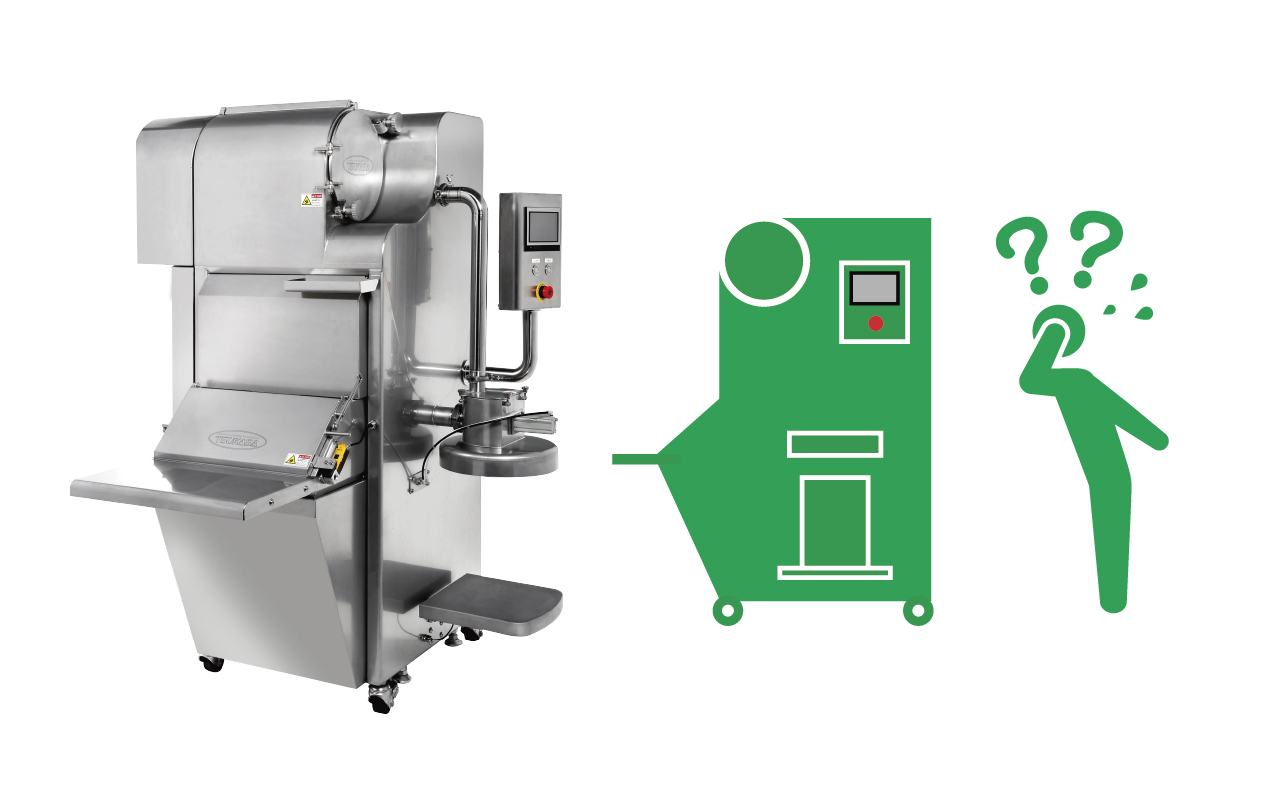
▲Divider Scale Hybrid
Why are weighing values off when the type of powder changes?
The divider scale operates on the principle of “closing the gate when reaching the set weight.” However, there is a drop (lag) between closing the gate and the powder finishing of falling. Also, the amount of drop varies significantly depending on the properties of the powder.
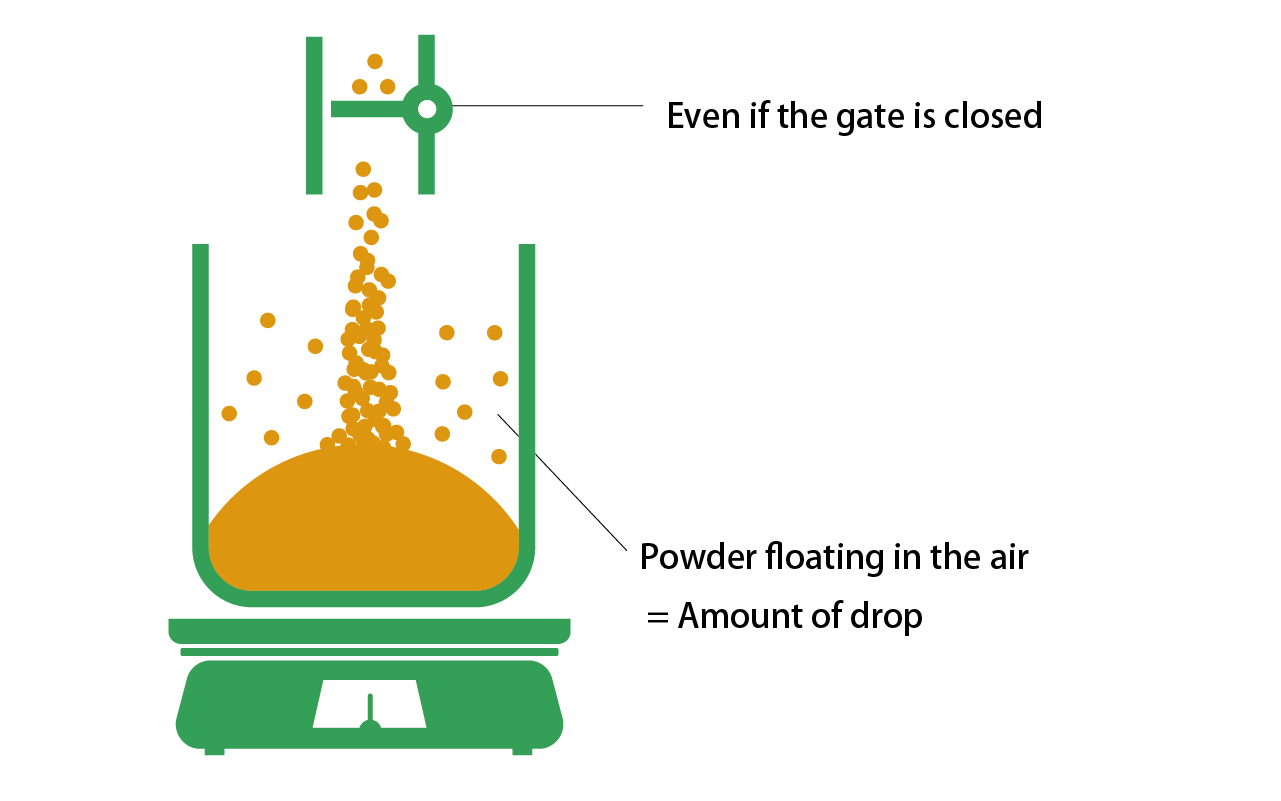
E.g.
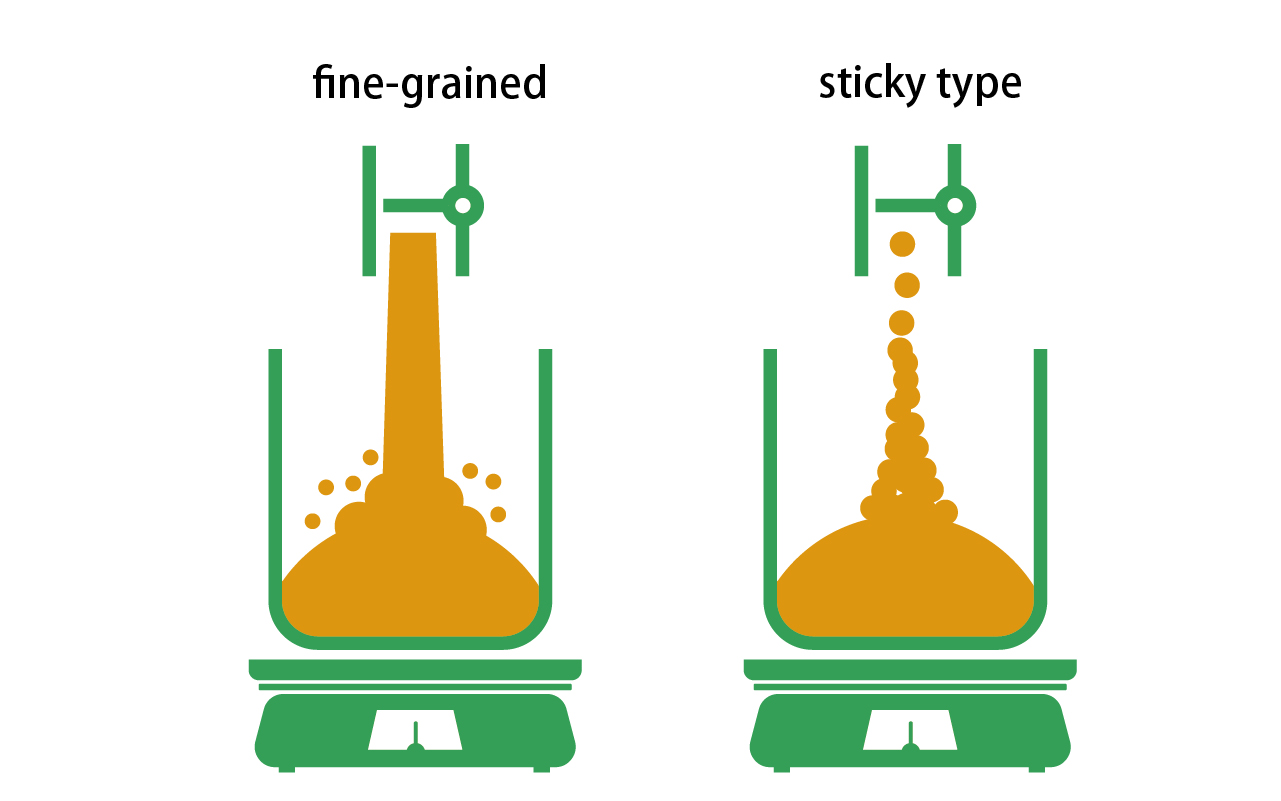
◎ Powder with high fluidity (fine-grained)
The drop is likely to be large → Weighing values are likely to be over the limit
◎ Powder with high adhesion (sticky type)
The drop is likely to be small → Weighing values are likely to be under the limit
Offsets in weighing values can be eliminated through “drop correction”
The divider scale has a setting item called “drop correction.” You can adjust the settings for each type of powder to optimize weighing accuracy.
◎ Calculation formula
[Stop weight] = [Target value] - [Drop correction value]
If the weighing value is slightly over the limit → Increase the drop correction value (Move the stop point forward)
If the weighing value is slightly under the limit → Decrease the drop correction value (Move the stop point backward)
[Stop weight] = [Target value] - [Drop correction value]
If the weighing value is slightly over the limit → Increase the drop correction value (Move the stop point forward)
If the weighing value is slightly under the limit → Decrease the drop correction value (Move the stop point backward)
If the situation does not improve even after that:
Review of pre-quantitation values
You can adjust the setting to increase the pre-quantitation value (the point at which supply switches between high and low levels) so that it switches to low supply earlier.
Check the supply speed (Number of rotations)
The appropriate supply speed may vary depending on the type of powder.
Suggestions from TSUKASA
Record and manage your setting values as recipes!
We recommend optimizing the “drop correction value” and “pre-quantitation value” for each type of powder, and recording and managing the setting value when switching raw materials as a recipe. In most cases, offsets in weighing values are usually not due to equipment malfunction, and can be eliminated through “optimizing settings.” First, review the drop correction value.
Please also refer to this
The cause of offset in weighing values is not just a “drop.” Factors such as the adhesion of raw materials to the load cell, tension of the flexible tube, and knocker settings also affect it.
⇒ What should be checked when the “measured weight does not match the set value”?
⇒ What should be checked when the “measured weight does not match the set value”?